posted   4 September 2004

2004 Books and Lectures background page

This web page is for the convenience of reporters, book review editors, bookstores arranging display advertising, lecture arrangers, my book publishers, and the like (who automatically have permission to reprint photos; others should consult by email).


William H. Calvin 
It's an image (spam....)  
 
 University of Washington

 SEATTLE, WASHINGTON 98195-1800 USA  

A Brief History of the Mind:  From Apes to Intellect and Beyond media inquiries should go to Jordan Bucher at the Oxford University Press 1.212.726.6111 fax: 212.726.6447

A Brain for All Seasons:  Human Evolution and Abrupt Climate Change media inquiries should go to Erin Hogan at the University of Chicago Press 1.773.702-3714. 

If you need to speak with me, try email first.   You can leave voicemail at 1.206.374.2260 which will be forwarded as an email attachment to me wherever I am traveling.  Consult the Trips and talks box on the home page to see a partial schedule.


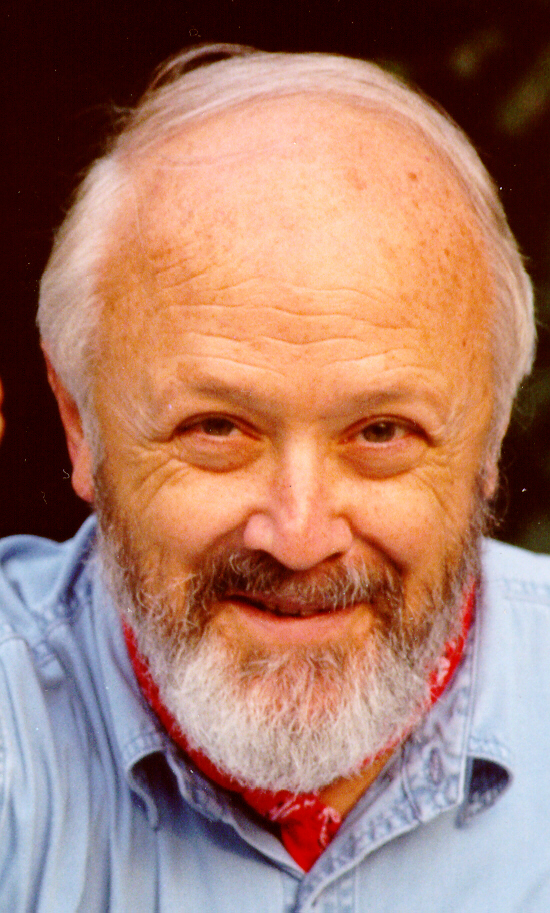
Higher-resolution author picturesright-click to download hi-resolution version

If capturing a web graphic via right-clicking produces too low resolution, there is a higher-res version of each picture available by left-clicking on the photo; right-click on this hi-res to save it to a file.

Academic lecture arrangers who, to keep the bureaucracy happy, need a copy of an academic CV can get one in the UW School of Medicine's format, suitable for printing out but lacking hypertext links. Anyone simply wanting a publications list or a list of webbed reprints is better off avoiding the CV.

Do include the home page URL in talk announcements so people can read ahead:

WilliamCalvin.com


Tag Lines

I've spent a lot of time explaining to people that I'm not really a psychiatrist, despite being an Affiliate Professor of Psychiatry and Behavioral Sciences -- just as I used to have to explain that I wasn't really a neurosurgeon. I'm really just a Ph.D. in physiology and biophysics with a long association with clinicians and zoologists. So I tend to steer people away from using formal academic titles. Here are several short-medium-long tag lines you can safely use:

William H. Calvin is a neurobiologist at the University of Washington in Seattle, and author of a dozen books.

William H. Calvin is a theoretical neurobiologist at the University of Washington in Seattle. He is the author or co-author of 12 books, including A Brain for All Seasons:  Human Evolution and Abrupt Climate Change which won the Phi Beta Kappa 2002 Book Award for Science.  A Brief History of the Mind: From Apes to Intellect and Beyond is the latest book.

William H. Calvin, Ph.D. is a theoretical neurobiologist at the University of Washington in Seattle, the author of 12 books including The Cerebral Code (MIT Press 1996), How Brains Think (Science Masters 1996), and, with the neurosurgeon George A. Ojemann, Conversations with Neil's Brain (Addison-Wesley 1994).  His research interests include the recurrent excitatory circuitry of cerebral cortex used for split-second versions of the Darwinian bootstrapping of quality, the four-fold enlargement of the hominid brain during the ice ages, and the brain reorganization for language and planning.  His language book, a collaboration with the linguist Derek Bickerton, is about  the evolution of syntax, Lingua ex machina: Reconciling Darwin and Chomsky with the Human Brain (MIT Press, 2000).   He has long been following the paleoclimate and oceanographic research on the abrupt climate changes of the ice ages, hoping to find a connection to the big-brain problem, and is the author of The Atlantic Monthly's cover story, "The Great Climate Flip-flop."  His 2002 book, A Brain for All Seasons:  Human Evolution and Abrupt Climate Change, brings his anthropology and climate interests back together again; it won the Phi Beta Kappa Book Award for Science.  A Brief History of the Mind: From Apes to Intellect and Beyond is the latest, from Oxford University Press.


OR, if you prefer first-person narrative style:

William H. Calvin, Ph.D.  I am a theoretical neurobiologist, Affiliate Professor of Psychiatry and Behavioral Sciences at the University of Washington School of Medicine in Seattle.  I’m also affiliated with Emory University's great apes project and on the Board of Advisors to the Foundation for the Future.

By now I have written a dozen books for general readers.  My occasional magazine articles include “The emergence of intelligence” for Scientific American (1994) and “The fate of the soul” for Natural History (June 2004).  My 1998 cover story for The Atlantic Monthly, "The great climate flip-flop," grew out of my long-standing interest in abrupt climate change and how it influenced the evolution of a chimpanzeelike brain into a more human one.  Together, they are the topic of my 2002 book, A Brain for All Seasons:  Human Evolution and Abrupt Climate Change; it won the Phi Beta Kappa Book Award for Science.

A Brief History of the Mind: From Apes to Intellect and Beyond from Oxford University Press (2004) addresses what led up to the “Mind’s Big Bang” about 50,000 years ago, a creative explosion compared to the very conservative trends in toolmaking over the previous 2.5 million years. That span featured two million-year-long periods without much progress despite the growth in brain size.  Not only was the brain increase apparently driven by something invisible to archaeology  (perhaps cooperation, protolanguage, or throwing accuracy), but if bigger brains were capable of being more clever, it didn’t carry over to toolmaking.  The other big puzzle is that our species, Homo sapiens, big brain and all, was around for perhaps 100,000 years without doing too much that was different from their predecessors and from Neanderthals.  Our big brain may (or may not) be essential for our higher intellectual functions (creative structured thought), but it sure isn’t sufficient.

My neurobiology research interests primarily concern the neocortical circuits used for detailed planning and for improving the quality of the plan as you “get set,” presumably utilizing a milliseconds-to-minutes version of the same Darwinian process (copying competitions biased by natural selection) seen in the immune response and species evolution on longer time scales.  My research monograph, The Cerebral Code: Thinking a Thought in the Mosaics of the Mind (MIT Press, 1996) concerns darwinian processes in neural circuitry that can operate on the time scale of thought and action to resolve ambiguity and shape up novel courses of action.  My language book, a collaboration with the linguist Derek Bickerton, is about the evolution of syntax, Lingua ex Machina: Reconciling Darwin and Chomsky with the Human Brain (MIT Press, 2000).  

I started out in physics at Northwestern University, then branched out into neurophysiology via studies at MIT, Harvard Medical School, and the University of Washington (Ph.D., Physiology & Biophysics, 1966).  I’ve had a long association with academic neurosurgeons and psychiatrists without ever having had to treat a patient.  Lately I hang out with the paleoanthropologists and biologists.


The Virtual Index for my books and articles,
far better than my printed index in most cases:

Google
WWW
WilliamCalvin.com
And my favorite source for looking up
 other authors' books (and who has quoted them):

Search:
Keywords:
In Association with Amazon.com

(If you find this useful, you might wish to bookmark this page of search forms)


Click on a cover to read the book's web pages (full text, plus color illustrations in many cases)


A Brief History
 of the Mind, 2004

click to order from amazon.com
A Brain for All Seasons
2002

click to order from amazon.com
Lingua ex Machina
2000

click to order from amazon.com
The Cerebral Code
1996

click to order from amazon.com
How Brains Think
1996

click to order from amazon.com
Conversations with
Neil's Brain
1994


Bio

Here's a bio written for the Global Business Network:

I talk a lot about ape-to-human evolution and all those abrupt climate changes along the way. But mostly I try to extend Darwin's intellectual revolution to brain mechanisms. What sort of darwinian brain wiring allows us, in just a split second, to shape up a better thought?

William H. Calvin is a theoretical neurophysiologist on the faculty of the University of Washington School of Medicine, and author of The Cerebral Code: Thinking a Thought in the Mosaics of the Mind (MIT Press, 1996) on his own research into darwinian processes that operate on the time scale of thought and action. His collaboration with the linguist Derek Bickerton is about  the evolution of syntax, Lingua ex Machina: Reconciling Darwin and Chomsky with the Human Brain (MIT Press, 2000).  His human evolution book,  A Brain for All Seasons:  Human Evolution and Abrupt Climate Change, won the Phi Beta Kappa Book Award for "contributions to the literature of science."

He also writes books for general readers, such as How Brains Think, in the widely-translated Science Masters series. The Throwing Madonna, The Cerebral Symphony, and The Ascent of Mind are about brains and evolution. The River That Flows Uphill is about his two-week float trip down the rapids of the Colorado River in the bottom of the Grand Canyon.  In Conversations with Neil's Brain, he narrates a long day of neurosurgery for epilepsy, telling stories about how the brain works but focusing on how an internal voice is generated, one that occasionally speaks aloud. His October 1994 Scientific American article explores "The Emergence of Intelligence."  A Brief History of the Mind: From Apes to Intellect and Beyond is the latest, from Oxford University Press. 

All of his books and recent articles have Web pages.

He started out in physics at Northwestern University, then branched out into neurophysiology via studies at MIT, Harvard Medical School, and the University of Washington (Ph.D., Physiology & Biophysics, 1966). He has had a long association with academic neurosurgeons and psychiatrists "without ever having to treat a patient."


There is a narrative bio at the end of The Cerebral Code, reprinted below:

After an early flirtation with photojournalism and electrical engineering, I majored in physics at Northwestern University (B.A., 1961), spent a year at M.I.T. and Harvard Medical School absorbing the atmosphere of what eventually became known as neuroscience, then went to the University of Washington to do a degree in physiology and biophysics (Ph.D., 1966) working under Charles F. Stevens. I subsequently stayed in Seattle, spending 20 years on the faculty of the Department of Neurological Surgery at the other end of the building, a wonderful postdoctoral education as well as a home for my theoretical and experimental work on neuron repetitive firing mechanisms. After a 1978-79 sabbatical as visiting professor of neurobiology at the Hebrew University of Jerusalem, my interests began to shift toward theoretical issues in the ensemble properties of neural circuits -- and to the big brain problem of hominid evolution. Friends in psychology, zoology, archaeology, and physical anthropology tried hard to educate me as I stumbled into their fields during the 1980s. As I began writing books and royalty advances arrived, I increasingly took unpaid leave, stopped writing grant applications, and shed responsibilities. Other university researchers may spend a third of their time teaching students and coping with the bureaucracy; I now spend about the same proportion of my time writing books for general readers and coping with publishers. For some years now, I have been an affiliate member of the faculty of the Department of Psychiatry and Behavioral Sciences at the University of Washington -- again a wonderful education, though I am no more a psychiatrist now than I was a neurosurgeon before. Pressed for a specialization, I usually say that I'm a theoretical neurobiologist.

If it's my abrupt climate interests that you need a bio for, consult my climate page.  If it is early history, how I got interested in various things, see E. Simon Hanson, "An interview with William H. Calvin," at www.brainconnection.com.

Articles about William H. Calvin

E. Simon Hanson, "An interview with William H. Calvin," at www.brainconnection.com (2000). See also http://WilliamCalvin.com/2000/brainconnection.htm.

The Atlantic Monthly's Editor's Column "77 NORTH WASHINGTON STREET"

The OMNI Magazine Prime Time interview bio is at http://www.omnimag.com/talk/bios/wcalvin.html

The San Diego Union-Tribune had an excellent feature story by Mark Sauer in their May 22, 1996 issue, using baseball as a lead into the throwing theory for language origins.

There's a feature in the Los Angeles Times.


To order a copy of one of my more recent books, click on a cover for the link to amazon.com. 


A Brief History
 of the Mind, 2004

click to order from amazon.com
A Brain for All Seasons
2002

Lingua ex Machina:  Reconciling Darwin and Chomsky with the Human Brain (Calvin & Bickerton, 2000)
Lingua ex Machina
2000

The Cerebral Code:  Thinking a Thought in the Mosaics of the Mind (1996)
The Cerebral Code
1996

How Brains Think:  Evolving Intelligence, Then and Now (1996)
How Brains Think
1996

Conversations with Neil's Brain:  The Neural Nature of Thought and Language (Calvin & Ojemann, 1994)
Conversations with
Neil's Brain
1994

The River That Flows Uphill
The River That
Flows Uphill

1986

The Throwing Madonna:  Essays on the Brain
The Throwing Madonna
1983

Copyright ©2004 by William H. Calvin

William H. Calvin
Home Page - Books - Research - Talks - The Bookshelf - Brief Bio
Mailing address: UW, Box 351800, Seattle WA 98195-1800 USA
Express and packages:  208 Kincaid, UW, Seattle 98195 USA
This page has been accessed times since 2004.